Intro to Public Speaking

A year-long public speaking course that helps students build the confidence and skills to speak clearly, think on their feet, and connect with an audience. Students meet once a week and progress from foundational confidence-building through storytelling, informative speaking, and persuasive speaking — ending in a capstone showcase performed for classmates and families.

Enroll in This Course
Age Groups
1st–5th grade
Tuition
$40
per class
Billed per semester, by the number of classes it holds
Format
1.5 hours weekly
after school bell
Instructor
Speech/drama specialist or related major
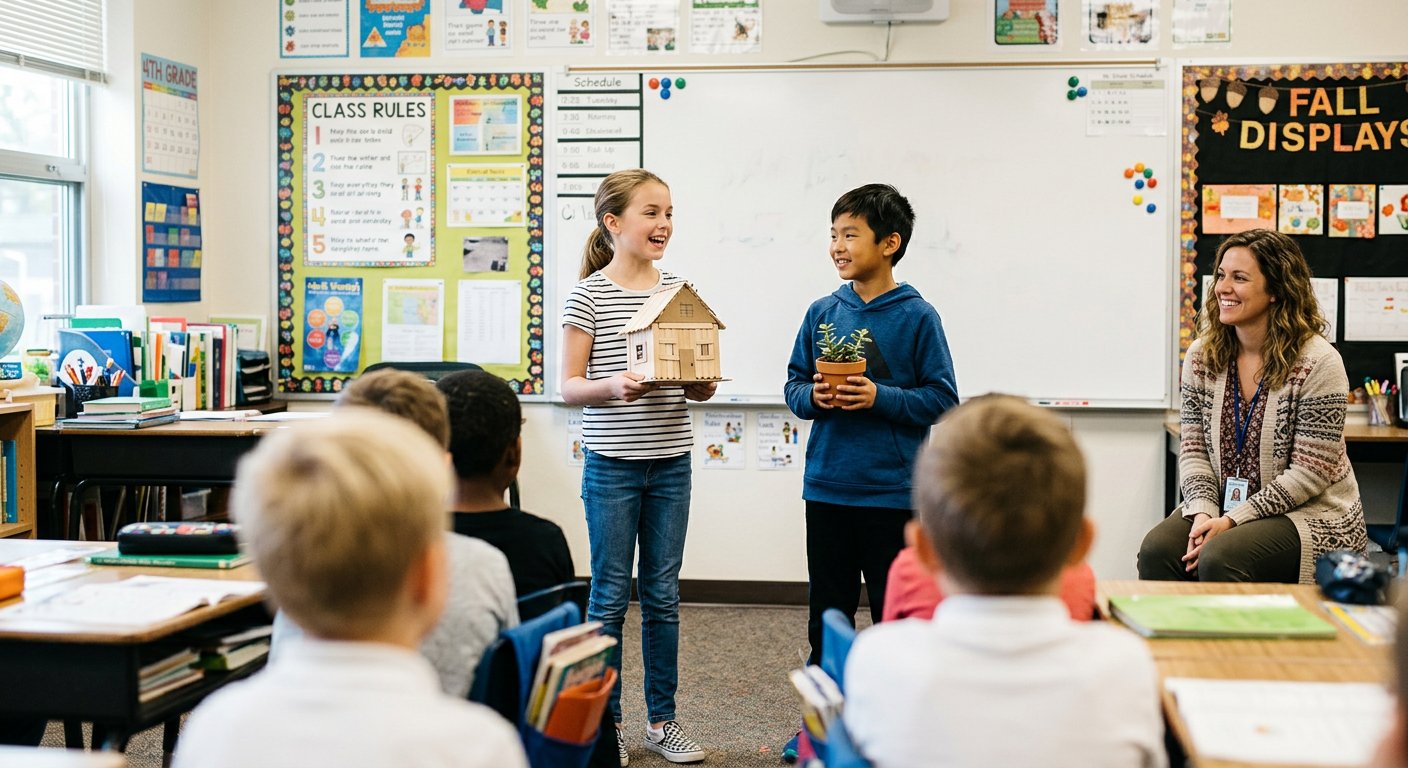
Two students presenting a project to their classmates while their teacher listens

Learning Outcomes

By the end of the course, students will be able to:

  • Speak clearly and audibly with appropriate pace, volume, eye contact, and posture.
  • Organize ideas into a clear beginning, middle, and end using outlines and note cards.
  • Use vocal and physical delivery techniques — tone, expression, gestures — to engage an audience.
  • Compose and deliver narrative, informative, and persuasive speeches.
  • Give and receive specific, constructive peer feedback.
  • Use calming strategies to manage speech anxiety and build lasting self-confidence.

Curriculum at a Glance

Each unit ends with a low-stakes showcase, so students practice performing in front of a real audience regularly — not just once at the end of the year.

Unit 1Finding Your Voice
Welcome to Public Speaking & Icebreakers
Introducing yourself and naming what makes a good speaker
What Makes a Great Speaker? Active Listening
Building the "Speaker Superpowers" chart; partner interviews
Volume & Voice Control
Matching your volume to the size of your audience
Eye Contact & Posture
The eye-contact triangle and confident stance
Managing Nerves + Unit Showcase
Calming strategies, then a 30–45 second "About Me" speech
Unit 2Structuring a Speech
The Speech Sandwich
Intro, body, and conclusion as a sandwich model
Grabbing Attention — Hooks & Openings
Writing question, fun-fact, and mini-story hooks
Organizing the Middle — Main Points & Details
Building a 3-point outline with supporting details
Strong Conclusions
Ending with a summary and a memorable final line
Note Cards + Unit Showcase
Key-word note cards, then a 1-minute structured speech
Unit 3Storytelling & Narrative Speaking
Elements of a Great Story
Character, setting, problem, and solution
Descriptive Details & Sensory Language
Helping the audience picture your story; show don't tell
Voices & Characters — Expression in Storytelling
Bringing characters to life with voice and expression
Pacing & Pausing for Effect
Using pauses to build suspense and emphasis
Storytelling Showcase
A personal narrative with structure, detail, and expression
Unit 4Informative Speaking
What Is Informative Speaking? Choosing a Topic
Picking a topic you know well and narrowing it down
Research Basics & Gathering Facts
Finding 3–5 facts from reliable sources; fact vs. opinion
Organizing an Informative Speech + Visual Aids
Grouping facts into categories; building a visual aid
Answering Questions & Handling the Unexpected
Calm, confident Q&A — including "I'm not sure, but I can find out"
Informative Speech Showcase
A 1.5–2 minute speech with a visual aid and Q&A
Unit 5Persuasive Speaking & Delivery Mastery
What Is Persuasion? Facts, Opinions & Reasons
Stating an opinion and backing it with a reason
Building a Persuasive Argument
Two to three reasons, each with an example
Persuasive Language & Call to Action
Persuasive word bank and a strong closing line
Gestures, Movement & Stage Presence
Purposeful gestures that strengthen the message
Persuasive Speech Showcase
A 1.5–2 minute persuasive speech; the audience votes
Unit 6Showcase Prep & Capstone
Choosing Your Capstone Topic
Selecting a narrative, informative, or persuasive speech
Drafting & Rehearsing (Round 1)
First rehearsal with glow/grow peer feedback
Rehearsing with Feedback (Round 2) + Props
Revising from feedback; finalizing visual aids
Dress Rehearsal
A full run under near-showcase conditions
Capstone Showcase Celebration
Final speeches for classmates and families; certificates

How Students Are Assessed

Assessment is formative and low-pressure. Each week students reflect briefly in a confidence journal, and each unit closes with a short, informal showcase assessed on a simple, student-friendly rubric — structure, delivery, and effort. Growth and participation matter more than polish. The year ends with a capstone speech performed for an audience of classmates and families, celebrated with certificates.